
Clinical Dietitian Course in Pune: Build your nutrition career
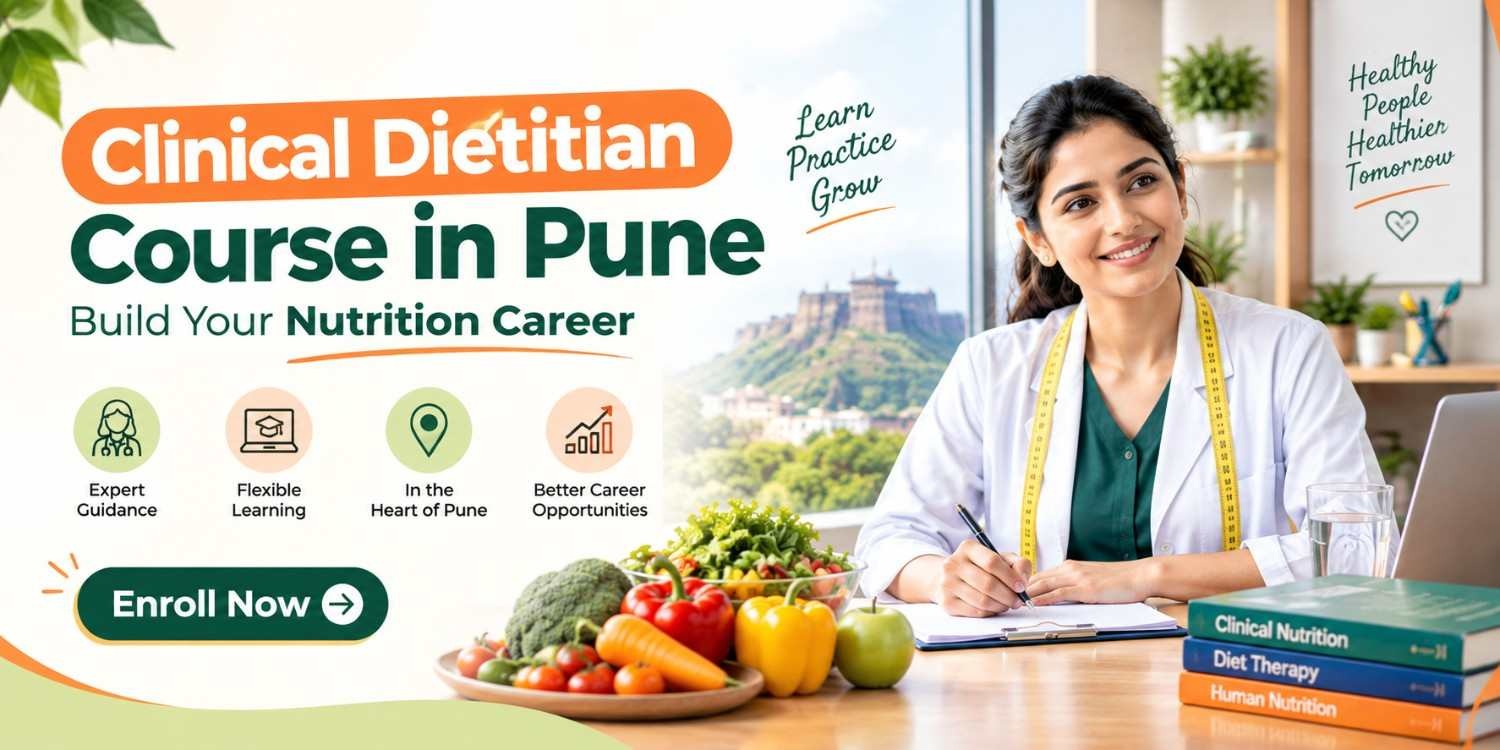
Pune has become one of India’s most active hubs for health, wellness and nutrition education. Hospitals, wellness clinics, corporate wellness programmes and nutrition startups are all expanding across the city so more students and professionals are looking at a clinical dietitian course in Pune as a way to enter this growing field.
But clinical nutrition is a more specialized path than general wellness or lifestyle nutrition — it’s knowing how diet interacts with medical conditions, how to work with healthcare teams and how to apply nutrition science not just to general diet advice.
In general terms this guide tells you what a clinical dietitian course covers, who it’s for and what you actually need to look for before enrolling in one.
What Is Clinical Nutrition, and How Is It Different?
Clinical nutrition is about using diet and nutritional therapy to treat medical conditions. General nutrition education tends to be around everyday healthy eating, weight management or lifestyle habits.
A clinical dietitian course typically teaches students about:
- How nutrition relates to diseases and conditions.
- Nutritional assessment methods.
- Diet planning based on clinical parameters.
- Working alongside doctors and healthcare teams.
- Hospital or clinical nutrition practices.
- Documentation and patient communication.
Because clinical nutrition is linked directly to patient care this field usually needs a stronger academic base (and in many cases recognised qualifications and practical training beyond a short course).
Why Are More People in Pune Choosing Clinical Nutrition as a Career?
India’s rising burden of lifestyle diseases (diabetes, hypertension, thyroid disorders and metabolic syndrome) has made nutrition professionals more important than ever before — nutrition is not diet charts.
Pune, in particular, has seen a rise in:
- Hospitals and clinics that offer nutrition counselling.
- Wellness centres with clinical nutrition support.
- Corporate wellness programmes.
- Diabetes and lifestyle disease management clinics.
- Diabetes and lifestyle disease management clinics.
- Clinics for diabetes and lifestyle diseases.
- Fitness and rehabilitation centres with nutrition professionals.
For students and working professionals in the city this gives multiple directions once basic nutrition knowledge is there and qualifications are in place.
What Does a Clinical Dietitian Course Usually Cover?
The exact curriculum can differ from institute to institute but most structured clinical dietitian courses build understanding across a few core areas.
Fundamentals of Human Nutrition
Before moving to clinical applications learners are introduced to macronutrients, micronutrients, digestion, metabolism and how the body uses nutrients for different functions.
Nutrition in Disease Management
This is usually the first part of a clinical course and covers nutritional considerations for diseases such as:
- Diabetes.
- Hypertension.
- Cardiovascular conditions.
- Renal (kidney) conditions.
- Gastrointestinal disorders.
- Thyroid and metabolic conditions.
Nutritional Assessment
Students learn how nutritional status is assessed (dietary history, anthropometry measurements and interpreting health parameters).
Diet planning based on clinical needs
Not generic meal plans here — this is about tailoring nutrition recommendations to a person’s medical condition, treatment plan and lifestyle.
Working Within A Healthcare Setting
Clinical dietitians usually work with doctors, nurses and other healthcare professionals so some courses also cover documentation practices, hospital nutrition protocols and communication within a clinical team.
Who Should Consider a Clinical Dietitian Course?
clinical dietitian course may be relevant to many learners but which one is right for you will depend on your background and career aspirations.
- Nutrition and life sciences graduates who want to specialise further.
- Working professionals in wellness or fitness who want to move into clinical applications.
- Healthcare adjacent people looking to expand into nutrition.
- Career switchers who want to build a long term career in clinical nutrition.
- Students planning further academic qualifications who want a strong foundation first.
If your long term goal is working with patients in a hospital or clinical setting then check what additional recognised qualifications, registrations or supervised practice may be needed for that role (requirements can vary).
Course Duration and Format: What to Expect
Clinical dietitian courses are offered in various formats and the one you need depends on your commitments and career stage.
- Short term or certificate courses are useful for building foundational understanding (e.g., someone new to the field or who wants to add something to their skill set).
- Diploma and structured programmes usually go deeper into disease specific nutrition and assessment methods (longer duration).
- Online and hybrid formats enable working professionals and students in Pune to learn without interrupting their existing commitments.
You don’t want to choose a course based on how quickly it can be done — you need to see what is actually being taught, how it is being taught and if there is any practical or case based component.
What to Look for Before Enrolling in a Clinical Dietitian Course?
There are now many institutes offering nutrition programmes so ask direct questions before you enrol.
- What does the curriculum actually cover? Ask for topics instead of just the course title.
- Is the learning practical or theoretical? Case studies, assignments and applied learning add more value than passive video content.
- Who teaches them? Courses taught by nutrition professionals or healthcare-linked faculty are more grounded in real life.
- Is there an internship or practical experience? Applied experience makes all the difference when you’re just getting started.
- What career guidance is there after you graduate? A good programme should help you understand realistic next steps based on your qualification.
- What’s included in the course fee? Compare study material, mentorship, assignments and support not just price.
Career Directions After a Clinical Dietitian Course
What you already have (education, experience), training (if any) available to you will determine where doors open for you after a clinical dietitian course.
Hospital and clinical settings
supporting nutrition counselling alongside medical teams (depending on qualifications for that role).
Wellness and Lifestyle Clinics
Clinical nutrition knowledge in diabetes, weight management or metabolic health clinics.
Corporate Wellness Programmes
Many companies in Pune now run wellness initiatives that require nutrition professionals to guide employee health programmes.
Nutrition Education and Content
Using clinical nutrition knowledge to develop educational content, training material or health communication for wellness platforms.
Further academic specialisation
Some learners use a basic clinical dietitian course as a springboard before they specialise in more advanced or recognised qualifications in dietetics.
Why Structured Learning Matters in Clinical Nutrition?
Clinical nutrition affects how people actually manage real health conditions so structured accurate learning is especially important here. A course that just skims topics without depth can leave students unprepared for real life situations.
At Nutralytics, the focus is on building nutrition education around structured learning, expert-led classes, and practical application rather than surface-level content. Programmes such as the Dietary Management of Diabetes Course and Dietary Management of Hypertension Course are designed to help learners understand nutrition in the context of specific health conditions, which forms an important part of clinical nutrition knowledge.
For those looking to bridge academic learning with real-world application, the 6-Week Online Internship Program offers a structured way to gain practical exposure alongside theoretical learning.
Is a Clinical Dietitian Course Right for You?
If you’re interested in the idea of using nutrition to help people manage real health conditions rather than just general wellness advice then a clinical dietitian course might be an option for you. Which one depends on your qualifications now, how deep the curriculum is and whether or not the course supports applied learning (not just theory).
Common questions about clinical dietitian courses
What is a clinical dietitian course?
A clinical dietitian course looks at how nutrition is used to manage medical conditions (nutritional assessment, disease specific diet planning and working in healthcare settings).
Is a clinical dietitian course different from a general nutrition course?
Yes. General nutrition courses are more about everyday healthy eating and lifestyle habits; clinical dietitian courses are specific to nutrition (medical conditions and patient care).
Can I do a clinical dietitian course online in Pune?
Yes many institutes like Nutralytics have online and hybrid formats so students and working professionals in Pune can learn without disturbing their schedule.
Do I need a science background to take a clinical dietitian course?
It depends on the course and level (some foundational courses are open to the general public; more advanced clinical pathways may require relevant academic background).
What can I do after a clinical dietitian course?
Depending on your qualifications and training you could work in wellness clinics, corporate wellness, nutrition education or use it as the basis for academic specialisation in clinical dietetics.
If you’d like to understand which nutrition course fits your background and career goals, you can get in touch with the Nutralytics team to discuss the available programmes.
Related Posts
Nutritional Programmes in India: A Complete Guide for Students and Professionals
The health scenario in India is changing fast and so is the demand for people…
Dietitian Course Online: Fees, Duration & Career Opportunities
Are you interested in nutrition and want to build a career where you can help…
Is a Food Nutritionist Course Right for Your Career Goals?
Nutrition has become an increasingly important part of conversations around health, wellness, fitness and lifestyle.…
Leave a Reply