
Why Do PhD Students Need Grant Writing Skills? A Guide to Research Funding
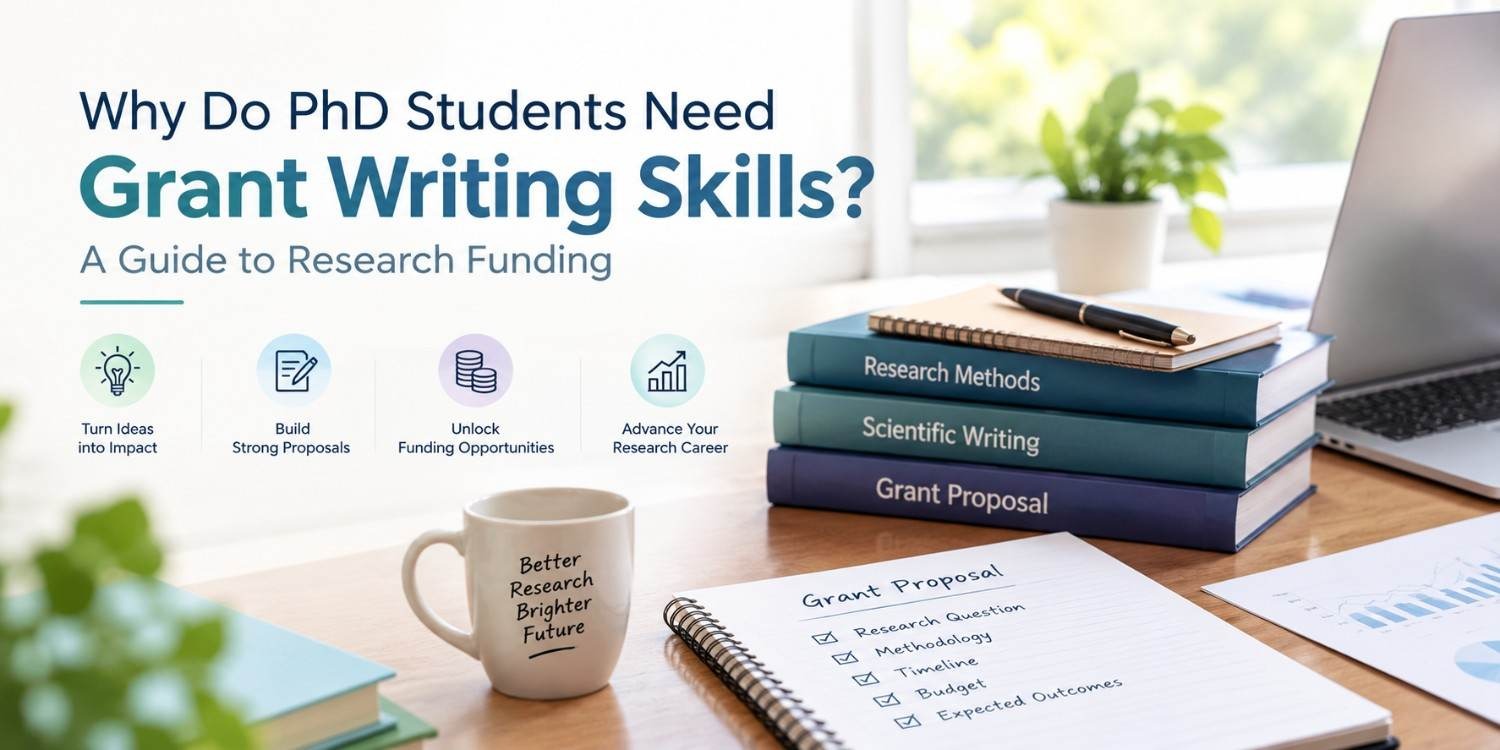
A good idea for research is often the start of a PhD journey but turning that idea into meaningful scientific work takes more than academic knowledge — laboratory experiments, data collection, research equipment, field studies and publication-related expenses might all need funding support.
This is where grant writing for PhD students comes in.
Grant writing helps researchers articulate their ideas to funding organisations, justify the scientific value of proposed work and resources needed to do it.
At Nutralytics we know what PhD scholars and early career researchers go through. Through our scientific writing and research mentoring services we give them the skills to plan, structure and communicate their research effectively.
What Is Grant Writing in PhD Research?
Grant writing is the process of preparing a structured proposal to ask for financial support for a research project.
A research grant proposal explains the research problem, objectives, existing evidence, proposed methodology, expected outcomes, project timeline and budget.
A PhD scholar investigating the effects of nutritional interventions on metabolic health might need funding for lab work, participant assessments or data analysis.
A well-written grant proposal explains why the research matters, whether the proposed study is feasible and how the requested funds will be used.
Why Is Grant Writing Important for PhD Students?
1. To Get Funding for Research Projects
Many projects need financial resources which aren’t available through regular university facilities. PhD students apply for research grants, fellowships, travel awards or project-specific funding (depending on eligibility) — grant writing helps them explain their financial needs in scientific terms.
2. To Have a Strong Research Problem
Students need to have a meaningful research gap before writing the proposal (i.e. reading published literature, understanding what has been found so far and explaining what is left unsaid). PhD students in pharmacology, nutrition, biotechnology, clinical research and allied health sciences must do this step because funding proposals have to be scientific.
3. To Have a Clear Research Methodology
Funding organisations need to know how the proposed research will be conducted. Students have to explain their study design, methods used, sample size considerations, data collection procedures and analysis plan. Learning grant writing helps researchers to develop realistic methodologies that match objectives, resources available and timeline proposed.
4. To Develop Research Budgeting Skills
A research proposal usually has a budget for eligible expenses (equipment, consumables, travel, personnel or laboratory investigations etc.). PhD scholars need to learn how to estimate these costs and justify why each expense is needed. These budgeting skills are useful when managing future projects.
5. To Enhance Academic Career Opportunities
Grant writing isn’t just for doctoral students. Researchers who are applying for postdoctoral fellowships, academic appointments or independent scientific projects will need to compete for research funding throughout their careers so gaining grant proposal writing skills as a PhD student can help long term professional development.
What Should a PhD Research Grant Proposal Include?
Requirements vary between funding agencies but generally proposals should include:
- Research title — A clear statement of what the study is about
- Background and rationale — What has already been done and why this study is needed
- Research objectives — Questions/hypotheses being investigated
- Methodology — Study design, methods used, data collection & analysis
- Expected outcomes — Scientific contribution & impact
- Expected timeline for completion
- Realistic budget justification
- References — Scientific literature supporting proposal
Each section needs to link logically to the next one showing that the research is both scientifically worthy and practically feasible.
Common Grant Writing Challenges Faced by PhD Students
Even if students have good research knowledge they may not be able to write a competitive funding proposal. Some common challenges are finding suitable funding opportunities, turning broad ideas into measurable objectives, explaining scientific significance, realistic budgets and strict application guidelines.
Another problem is writing for reviewers who may not know exactly what the applicant does. A proposal has to be technically correct but clear enough for the evaluation committee to understand why it matters.
Professional research mentoring can help students see these problems and develop proposal development skills.
How Nutralytics Supports PhD Students With Research and Scientific Writing
We at Nutralytics believe that researchers should know their own science and communicate it confidently. Academic and scientific writing support doesn’t mean we prepare documents on behalf of students — rather it develops research skills (not just document preparation).
Depending on your research needs our guidance might cover:
- Research proposal structure and funding guidelines.
- Literature review gaps.
- Refining questions and objectives.
- Planning appropriate methodologies.
- Scientific language, clarity and presentation.
- Budgeting and project planning.
- Proposal drafts checked for structure and consistency.
- Academic writing skills for future applications.
Our research-focused education is relevant to students and professionals in nutrition, pharmacy, pharmacology, healthcare, biotechnology, public health and life sciences more generally.
Who Can Benefit From Grant Writing Guidance?
Grant writing skills are useful for PhD scholars applying for research funding, postgraduate students planning future doctoral studies, early career researchers applying for fellowships and healthcare professionals wanting to do independent research.
Researchers applying to Indian funding organisations, universities or international programmes must follow eligibility criteria and proposal requirements of each opportunity — learning how to read these guidelines is part of preparing a good application.
Develop Your Grant Writing And Research Skills With Nutralytics
A good research proposal starts with a clear scientific question, realistic methodology and the ability to explain why this work should be supported.
Whether you are PhD student, postgraduate scholar or early career researcher looking for guidance on grant writing, research proposal development or scientific writing (or any combination of these) Nutralytics can help you develop your research communication skills.
Our research mentoring and academic writing support services will help scholars plan research more clearly and prepare proposals with greater confidence.
Contact Nutralytics to discuss your research and scientific writing support requirements.
Frequently Asked Questions About Grant Writing
No. Some students already get institutional funding or work on funded projects but learning grant writing can help them pursue additional research opportunities as well as prepare for future academic careers.
Yes. Eligible PhD students and researchers may find opportunities through universities, fellowships and research funding programmes. Eligibility varies and some grants require applications through faculty supervisor or recognised institution.
Yes. A thesis describes what was done and the findings; grant proposal explains what study you are proposing to carry out and asks for funding to do it.
Nutralytics offers research mentoring and scientific writing support to help students understand proposal structure, strengthen research objectives, improve scientific communication and write their own research documents.
Related Posts

How to Write a Manuscript: A Complete Guide for Doctors, PhD Students and Medical Researchers
Writing a research paper is academic and professional development of doctors, PhD students, medical researchers,…

Medical and Scientific Writing Services: Supporting Research, Healthcare and Life Sciences
Medical and scientific research is the basis for healthcare advances, clinical understanding and evidence based…

82% of Urban Indians Are Stressed but Think They Are Healthy: Why Your Smarter Corporate Wellness Program Needs a Rethink
A new 2026 study shows that urban India feels healthy but is quietly stressed. Here…
Pingback: How to Write a Manuscript: 7 Essential Steps
Pingback: Grant Writing for PhD Students: 7 Essential Skills