
82% of Urban Indians Are Stressed but Think They Are Healthy: Why Your Smarter Corporate Wellness Program Needs a Rethink
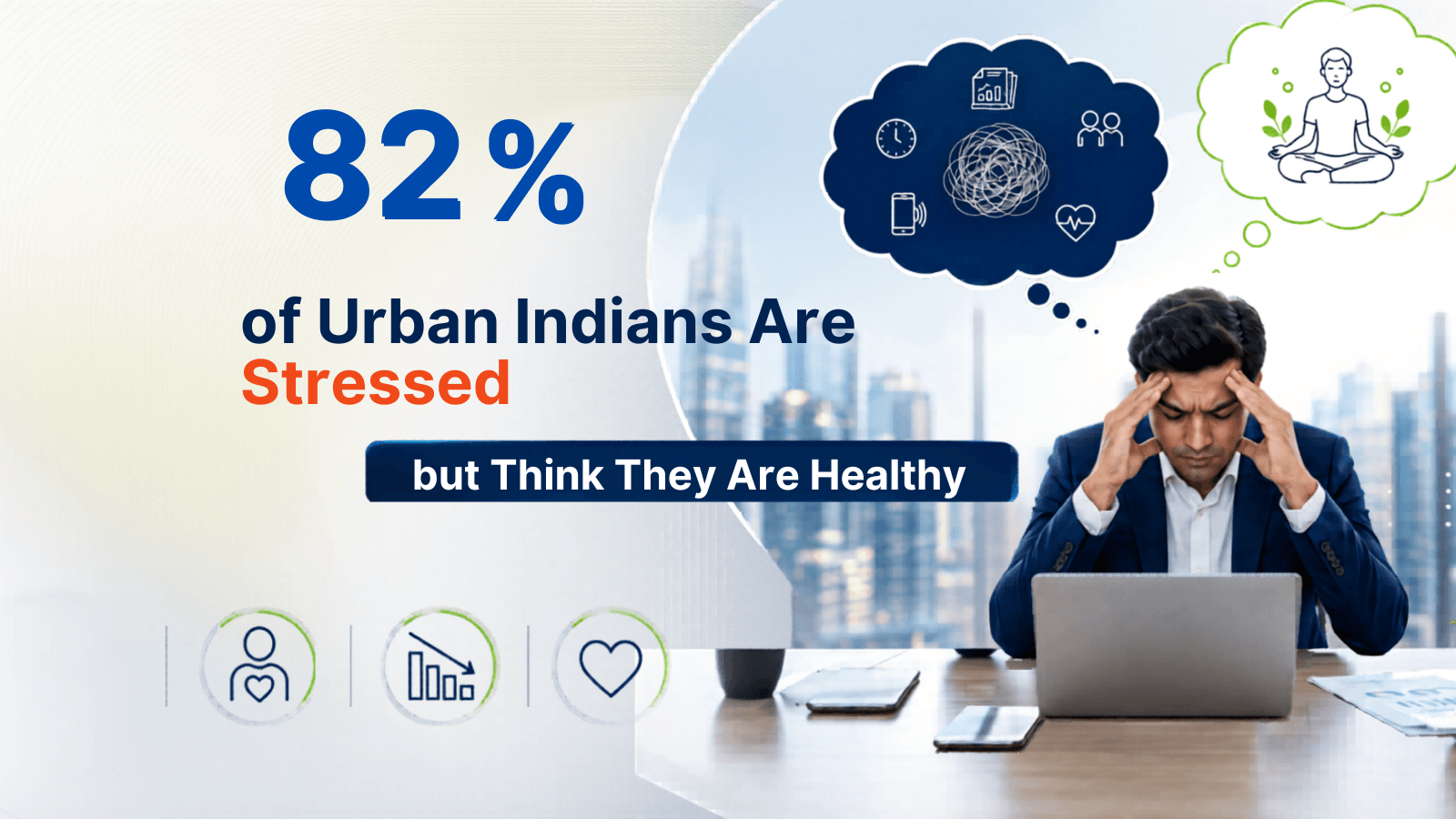
A new 2026 study shows that urban India feels healthy but is quietly stressed. Here is why a smarter corporate wellness program matters more than ever.
Most offices approach health superficially. There is often a gym discount that goes unused, an annual health camp, and a fruit bowl in the pantry that disappears within a week. These initiatives are treated as checkboxes. However, recent studies reveal that these efforts miss the underlying issues.
The India Health Quotient 2026, released in June by Manipal Cigna and You Gov. India, surveyed 2,600 people across 16 cities. The finding is striking. A full 82 percent of urban Indians report experiencing stress, yet only 1 percent describe their health as poor. People feel fine. They are not. This is exactly the gap a real corporate wellness program is meant to close, and why a tick-box employee wellness program no longer works.
The Problem Hiding in Plain Sight
At first glance, Indian offices appear healthy. Gyms are occupied, protein consumption is popular, and meditation apps are widely used. However, underlying data reveal a different reality.
Nearly seventy percent of Indian workers have one or more lifestyle-related health risks. Workers who sit for long periods are at increased risk for developing cardiovascular disease. Conditions such as diabetes, high blood pressure, thyroid disease, and fatty liver are now being diagnosed at an earlier age than ever before; many people are now developing these conditions in their twenties and thirties. The challenge with lifestyle-related health risks is that workers may feel fine now while they have lifestyle-related health risks accumulating in the background.
The India Health Quotient illustrates the gap between the perceived value of wellness and the reality of consistent participation in wellness programs. The workplace is critical in closing or widening the gap because this is where adults spend a significant amount of their time.
Why Old-Style Wellness Programs Fail
Traditionally, corporate wellness has consisted of annual health checks and informational posters about hydration. While these initiatives appear supportive, they have minimal impact on actual health outcomes.
A single annual screening catches a problem after it has formed, not before. A generic diet chart handed to 500 employees ignores the fact that a software engineer with a fatty liver and a sales executive with prediabetes need completely different plans. And a gym membership helps the people who were already going to exercise, while the at-risk majority never use it.
The outcome is a program that appears effective in documentation but yields few measurable results. Employees remain stressed, lifestyle risks increase, and insurance claims continue to rise. Companies invest in wellness yet still bear the financial burden of poor health.
What a SmarterCorporate Wellness Program Looks Like
An effective program begins with the foundational principle of nutrition science: conduct assessments first, then personalise interventions.
To effectively address health risk through an employer-sponsored program, employers must first conduct thorough health risk evaluations of each participating employee. The evaluations must include more than just blood tests, but must include a careful examination of the employee’s diet, activity level, level of sleep and stress, as well as the employee’s history of chronic health issues. The findings from each evaluation will be used to develop a targeted plan of action for each employee, including the provision of either a nutrition plan or additional support to employees who have been identified as being at risk for illness and/or being under stress.
The second step in creating a successful employer-sponsored program is inclusivity. Many employees may not be able to participate in an employer-sponsored program if it is only offered at a central head-office location. Additionally, for employees who work remotely, shift workers or are in the field, programs need to be offered on mobile tools or in the employee’s primary language. Finally, the success of employer-sponsored program should be assessed through the tracking of long-term outcomes for employees, rather than through the mere recording of employee participation.
The Nutrition Piece Most Programs Miss
As a result of placing fitness above nutrition, there has been an increasing number of lifestyle related diseases in Indian work sites such as type 2 diabetes, hypertension, fatty liver and obesity due largely to a person’s eating habits that are affected by long and irregular work hours; skipping breakfast, eating lunch from the vending machine, having dinner late at night and grazing throughout the day on chai and biscuits. A business that does not consider this is only treating the symptom rather than treating the cause.
An employee wellness program must include nutrition as a central focus with structured, professionally managed nutrition. A proven successful employee wellness program must include an individualised nutrition program, a supportive food environment in the workplace and nutrition information based on scientific evidence in order to produce long-term workforce health results greater than any other single program (i.e. step challenges).
The Way Forward
The India Health Quotient for 2026 can be used as an early warning signal or indicator. A workforce that considers itself to be healthy while simultaneously having a large number of undetected, hidden risks is more susceptible to preventable illnesses, with injuries or disease having implications for both employers and their employees.
These areas of concern may be addressed, and prevention can often be more cost-efficient than treatment. Companies who have created a corporate wellness programme inclusive of assessment, personalisation, and comprehensive nutrition will see an increase in employees’ overall health, decreased absenteeism, improved employee focus, and a reduction in claims made to long-term insurance.
This is where we can assist you. Nutralytics works with organisations to create wellness programmes, which utilise qualified nutrition professionals as the basis of employee wellness. If your current wellness offering consists solely of providing fruit on occasion, and providing annual physical exams, it is time to implement an employee wellness initiative which will yield measurable results. Contact one of our representatives to create an employee wellness programme that engages your employees and improves employee wellness.
Frequently Asked Questions
A corporate wellness program is an employer-led initiative designed to improve employees' physical and mental health. Effective programs combine health risk assessment, personalised nutrition and fitness guidance, stress support, and ongoing measurement.
Around 7 out of 10 Indian employees have at least one lifestyle-related health risk, and lifestyle diseases are appearing earlier than before. A good program helps detect and manage these risks early, reducing both human and financial cost.
Most workplace lifestyle diseases, such as diabetes, hypertension, and fatty liver, are strongly linked to diet. Structured, personalised nutrition guidance addresses the root cause rather than just the symptoms.
An annual camp detects problems after they form. A modern program continuously assesses risk, personalises interventions, includes all employee groups, and measures whether health risks are actually falling over time.
Nutralytics designs corporate wellness programs with qualified nutrition expertise at the centre, including risk assessment, personalised dietary plans, and inclusive delivery for all employee types.
Related Posts
Corporate Wellness Program Tips to Reduce Stress at Work
People who work in fast-paced environments are often stressed, which is bad for morale, output,…
Leave a Reply