
How to Become a Nutritionist in India: A Step-by-Step Career Guide
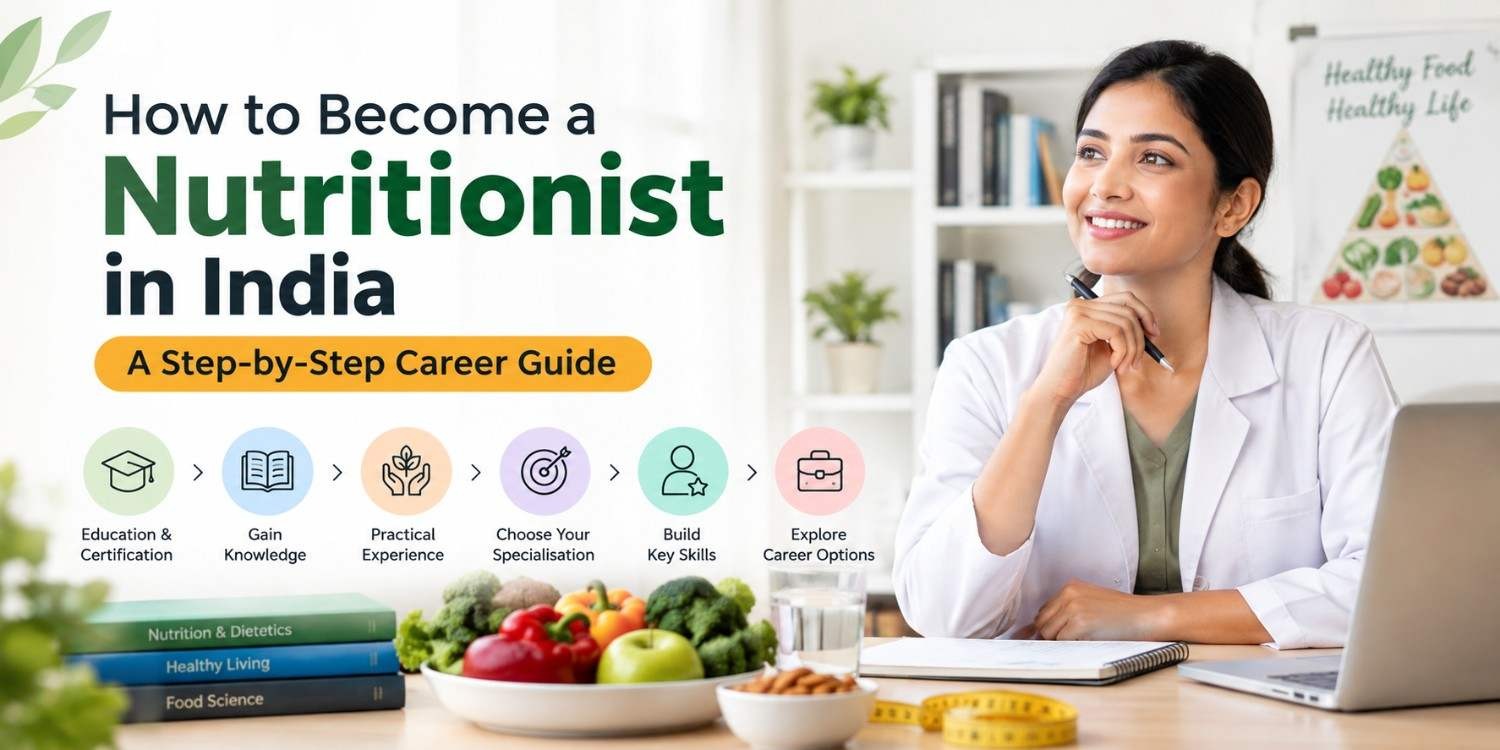
If you love food, health and wellness and helping people make better dietary choices then becoming a nutritionist could be a fulfilling career choice. Hospitals and wellness centres fitness organisations educational institutions private practice are just some of the areas nutrition professionals can work in.
If you are wondering how to become a nutritionist in India then generally the journey is choosing right academic background, practical knowledge and skills to work with different nutritional needs.
What Does a Nutritionist Do?
A nutritionist uses knowledge of food, nutrients and dietary patterns to educate people and support healthier eating habits. Depending on their education, training and professional role nutrition professionals may work in areas such as:
- Clinical and therapeutic nutrition
- Community nutrition
- Sports and fitness nutrition
- Public health
- Food and nutrition education
- Wellness programmes
- Research and academics
- Corporate wellness
Scope of practice may vary depending on the professional’s qualifications, training and workplace requirements.
How to Become a Nutritionist in India?
1. Choose the right educational background
A good science, nutrition, food science or related discipline foundation can help you get into the field.
Degree and postgraduate programmes may have subjects such as Food and Nutrition, Nutrition and Dietetics, Food Science, Biochemistry etc in life sciences.
For some food and nutrition professional roles government requirements recognise qualifications in Food & Nutrition and other disciplines too.
Before enrolling check whether the institution and programme are recognised and approved (UGC says students should check recognition status of higher-education institutions and programmes when relevant).
2. Develop Knowledge of Human Nutrition
Academic learning should go beyond calories and food groups. A good nutrition education should teach you:
- Macronutrients vs micronutrients
- Human physiology & metabolism
- Nutritional assessment
- Meal planning
- Food science
- Life stage nutrition
- Community nutrition
- Nutrition-related conditions
- Evidence based dietary practices
This foundation lets you know why a particular dietary approach might be appropriate rather than just following popular food trends.
3. Get Practical Experience
This is where practical exposure can make a difference in building up a nutrition career — internships, supervised projects, case-based learning or other opportunities where you apply classroom knowledge.
FSSAI itself has an internship programme (learning food and nutrition through live projects) which shows how practical exposure in broader field works.
4. Choose a Nutrition Specialisation
As your education develops, decide what area you want to focus on (clinical nutrition, sports nutrition, public health nutrition, child nutrition, lifestyle management or other specialisations).
If you want to work in clinical settings then study nutrition and dietetics specifically and gain supervised experience in this area.
5. Build professional skills
A nutrition career is not just academic knowledge — develop skills in:
- Client communication
- Nutrition assessment
- Research and evidence evaluation
- Meal planning
- Counselling and education
- Documentation
- Professional ethics
- Digital communication
These skills can help you communicate complex nutrition concepts in a simple practical way.
Is a Nutrition Course Enough to Become a Nutritionist?
It depends on the course, the pathway you want to take and what role you want to do.
Short term courses can give foundational or specialised knowledge while for people planning a long-term professional career a recognised degree or postgraduate qualification may be better (although this will depend on your interests).
Before choosing a programme check its curriculum, duration, practical training, faculty, institutional status and type of career pathway it supports.
Where Can Nutritionists Work in India?
Nutrition professionals can look for opportunities in:
- Hospitals and healthcare organisations
- Wellness centres
- Fitness and sports facilities
- Nutrition education organisations
- Food companies
- Public health programmes
- Research institutions
- Corporate wellness
- Private consultation
With experience and qualifications some professionals also develop independent nutrition education or consultation practices.
Build Your Nutrition Career With the Right Training
Becoming a nutritionist isn’t just about learning which foods are healthy. Structured education, practical experience, evidence based knowledge and communication skills.
If your long term goal is to be a trusted professional — maybe work towards being the best nutritionist in India in your area of choice — start by choosing education that gives you a strong scientific foundation with meaningful practical experience.
Talk to Anu Mahajan at Nutralytics
If you are thinking about a career in nutrition and want some advice on how to choose the right learning pathway talk to Anu Mahajan at Nutralytics.
You can discuss educational goals, areas of interest and nutrition courses or learning opportunities that might suit your career plans.
Contact Nutralytics to explore your next step in nutrition education and build your career with the right knowledge and practical foundation.
Related Posts

Food Nutrition Course in India at Nutralytics: Learn Nutrition for a Meaningful Career
Food is much bigger than just filling hunger. What we eat affects energy, growth, body…

Nutritional Programmes in India: A Complete Guide for Students and Professionals
The health scenario in India is changing fast and so is the demand for people…

Clinical Dietitian Course in Pune: Build your nutrition career
Pune has become one of India’s most active hubs for health, wellness and nutrition education.…
Leave a Reply