The healthcare, nutrition, and study disciplines need clear, evidence-based communication, thus medical writers are in demand. Scientific writing, study techniques, and real-world healthcare applications are being taught on Nutralytics to close this gap. Their seminars include medical communication, nutrition science, and clinical research skills that might assist students get careers.
Whether you’re new to healthcare writing or an established writer looking to grow, the appropriate medical writing courses can revolutionise your career.
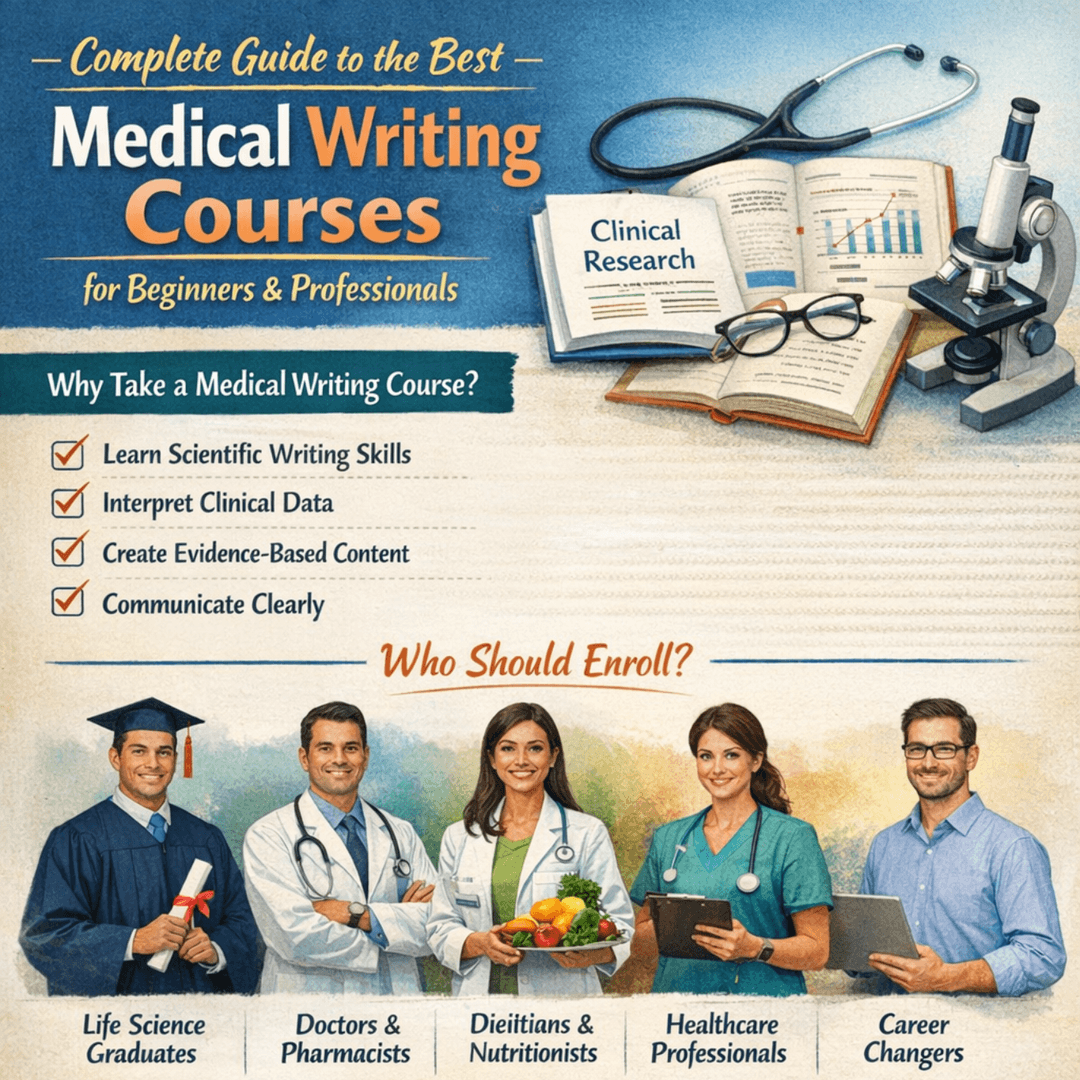
What Is a Medical Writing Course and Why Is It Important?
Medical writing programs help students communicate complex medical and science facts clearly, systematically, and morally. This includes writing study papers, medical records, lesson plans, and content for regulations.
This kind of training is becoming more and more important because the healthcare industry needs accurate scientific communication to help with study, teaching patients, and making new products.
Learning how to write medical reports helps students:
- Know the language of medicine and basic science ideas
- Get better at organised writing based on research
- Correctly understand clinical data
- Tell professionals and regular people about the results
- Keep records that are responsible and based on evidence
Who Should Enroll in a Medical Writing Course?
Medical writing isn’t just for doctors. Structured training programs are helpful for many workers.
The best students are:
- Graduates and postgraduates in life sciences
- Dietitians and nutritionists
- Doctors of pharmacy and clinical doctors
- Health care workers who want to share research
- Students who want to work in medical communication
- People who are moving into content jobs in healthcare
Today’s educational platforms are designed to help a wide range of students who want to learn more about health sciences, nutrition, and study.
Key Skills You Learn in Medical Writing Training
The well-designed medical writing course focuses on both learning the ideas and being able to use them.
Scientific Writing Fundamentals
Students are taught how to clearly present study results, responsibly interpret data, and organise manuscripts that can be used by journals or healthcare organisations.
Research Methodology
Courses often teach students how to plan studies, do literature reviews, and evaluate evidence, all of which are important skills for writing scientific content that people can trust.
Healthcare Communication
Medical students learn to simplify complex information for doctors, patients, and policymakers.
Practical Application
A lot of schools stress hands-on learning so that people can use what they’ve learned right away in their professional lives.
What Makes a Medical Writing Course Truly Effective?
Not all medical writing courses prepare students for work. The best schools combine tough academics with experience in the real world.
Keep an eye out for these things:
- Instruction led by experts: Courses led by doctors, researchers, and other experienced professionals give them more authority and depth.
- A practical way to learn: Application-based education makes sure that students learn useful writing skills as well as theoretical ones.
- Focus on multiple fields: combining nutrition, health sciences, and study methods makes experts with a wide range of skills.
- Workshops and consulting help: Some schools offer mentoring sessions to help students do research or get better at their job.
- Industry relevance: Courses that are relevant to the industry prepare students for real job chances by adapting to changing healthcare needs.
Conclusion
With healthcare and study changing all the time, learning specialised medical writing skills can lead to meaningful, high-impact jobs. Structured medical writing courses help you talk about science clearly and with confidence, whether you are just starting out or moving up in your career. Get in touch with Nutralytics right away to take the first step toward becoming a skilled medical writer.


Leave a Reply