Nutrition is expanding quicker because more individuals are learning about lifestyle diseases, seeking preventative care, and following evidence-based practices. But you must be wondering, how to become a certified nutritionist? Certification is crucial to building your reputation and practical knowledge. This applies whether you want to work in a clinic, start a practice, or coach wellness.
Now there are a lot of different ways to get qualified, from basic diplomas to advanced degrees in clinical and functional nutrition. Students, health care workers, and anyone else who wants to learn more about nutrition and health sciences can use Nutralytics and other tools like it to get structured, science-based training.
Students at Nutralytics get an education that is based on facts and learn the practical skills they need to make a change in the fields of nutrition and health care.
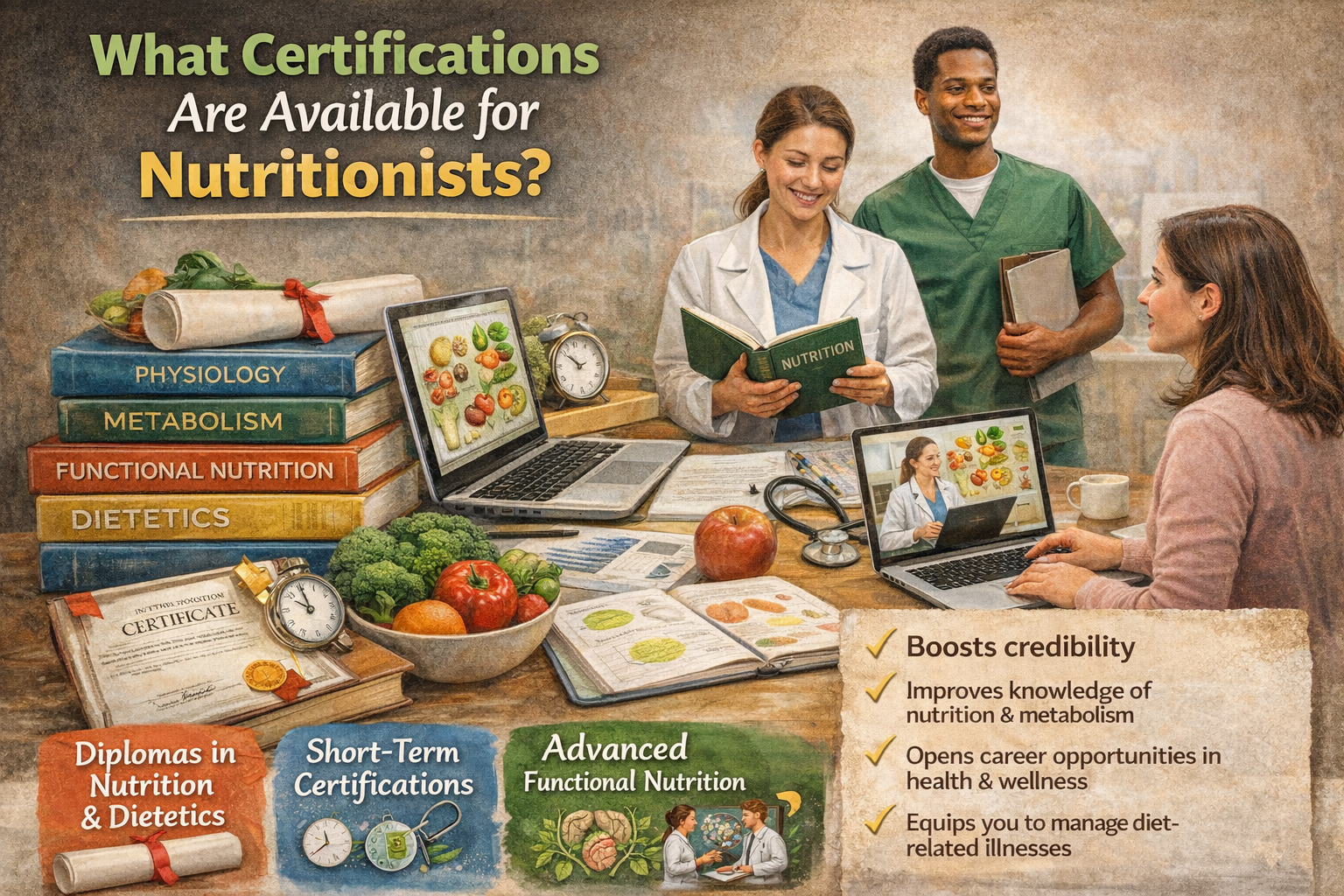
Why Should You Get Certified as a Nutritionist?
Certified food advisors demonstrate their knowledge and use of facts rather than trends.
Short, planned lectures can teach how nutrients affect metabolic health, illness prevention, and general health. As an example, Nutralytics has diploma courses in nutrition and dietetics that cover the basics of nutrition all the way up to advanced functional and disease-specific nutrition.
A well-known qualification can also help you get a job in a hospital, health care facility, study, or private practice.
Important Pros of Getting Certified:
- Makes people trust your work and boosts your business credibility
- Helps experts learn more about nutrition and metabolism
- Opens doors in the areas of health care, fitness, and study
- It teaches people how to manage their meals for certain illnesses.
- Encourages people to follow facts instead of fad diets
Diploma in Nutrition and Dietetics
Certificate programs are a frequent option for aspiring nutritionists to get their start.
The metabolism, macronutrients, vitamins, and making a diet plan are some of the important topics that are covered in these classes. People who want to work in the growing field of nutrition and dietetics can get online diploma courses in nutrition and dietetics from Nutralytics. This diploma is meant to teach them useful science information.
Most of the time, these awards cover:
- What people should eat to stay healthy
• Making diet plans and meal plans - Keeping illnesses that are linked to lifestyle
- The basics of working as a nutritionist
To get a well-rounded education, one example of a structured diploma has classes on how to control your weight, follow dietary rules, and learn about nutrition for kids and athletes.
Short-Term Specialized Certification Courses
Anyone who wants to get better at their job or become an expert in a certain area should get a short-term licence.
Nutralytics has short lessons that last one week, like
- Intermittent fasting essentials
- Foundations of gut health
- Anti-inflammatory diet principles
- Scientific and thesis writing
Practitioners with these certificates are better equipped to deal with modern health issues such as metabolic diseases, digestive issues, and inflammation.
Functional Nutrition Certifications
There’s more to functional eating than just keeping track of calories. It tries to figure out why people get sick and then changes their food and lifestyles to help them get better.
Advanced functional nutrition learning is part of Nutralytics. It looks at how nutrition can help with gut health, controlling chronic diseases, and getting healthier over time.
This way to certification is great for health care workers who want to use natural and preventative methods.
Internship-Based Nutrition Certifications
Do you know how to become a certified nutritionist? To boost your confidence and learn useful skills, it’s important to get training that you can do with your own hands.
Nutralytics has a six-week online job program that is meant to help you apply what you learn in school to real life.
This is what the game is made of:
- Nutrition for health and the physics of food
- What to say to customers and how to assist them
- Treatment with a special diet
- Community projects that help people eat better
- Case studies and projects you can do yourself
People who take part get a guide, help with finding a job, and a certificate that says they are ready for professional roles in the real world.
Conclusion
Many people want to know how to become a certified nutritionist? Nutralytics is one of a kind because it combines hard science with hands-on learning supervised by doctors and post-doc grads. The platform aspires to improve nutrition, dietetics, and health science education with evidence-based learning and skill development. Specialised courses, internships, and seminars help beginners and specialists improve.

Leave a Reply