Diabetes Explained: Types, Symptoms, Causes & Early Warning Signs You Shouldn’t Ignore
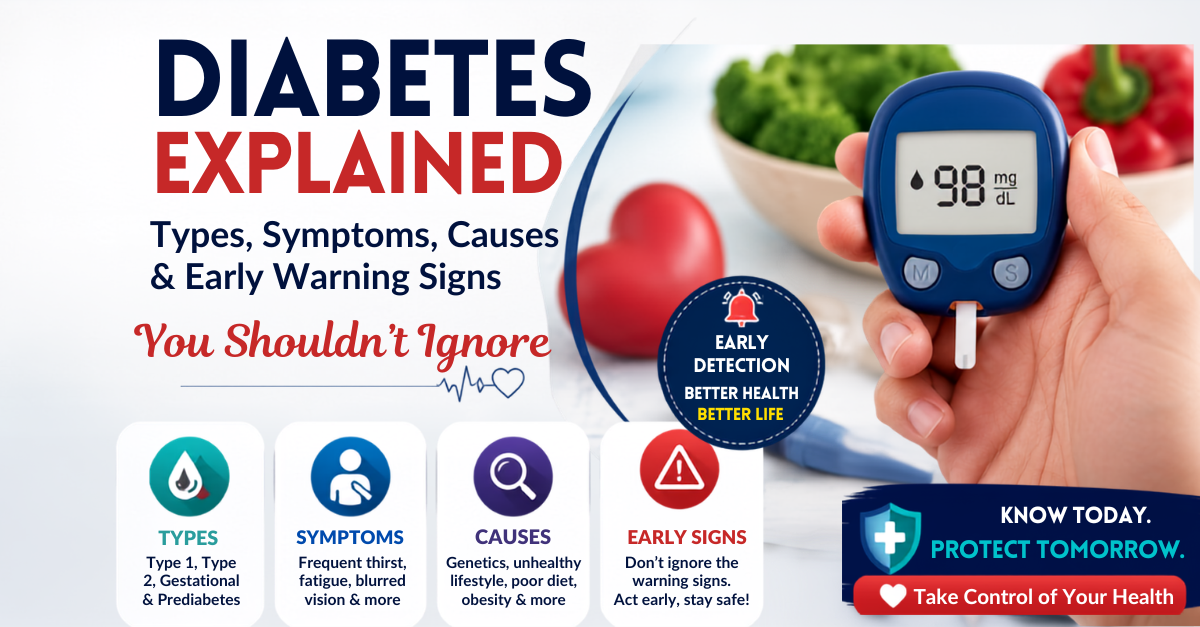
Diabetes is one of the most common diseases worldwide, and many people have it. Although many people are aware of early signs of diabetes, the small majority of them still do not comprehend the basic concept behind the disease and its fundamental elements such as its causes and risk factors.
The hopeful thing is knowing this disease helps people to get the treatment they need on time and therefore dispense with the perception of being in danger to develop some chronic issues. The material supplied tries to answer questions like these one is in the mind of so many people about glycemia. In writing, we will respond to the following questions::
- What is diabetes?
- What causes the appearance of diabetes?
- What types of diabetes are there?
- What symptoms can one use for an early diagnosis of diabetes?
- How can diabetes type 1 be distinguished from diabetes type 2?
So let us begin.
What Is Diabetes?
Diabetes is an ongoing condition regarding how glucose in the body is used. We take carbohydrates and our body makes glucose out of them, sending it to our cells with the assistance of insulin from the pancreas.
Diabetes occurs when:
- Your body doesn’t produce enough insulin.
- Your body can’t use insulin effectively (known as insulin resistance).
- Or your body doesn’t produce insulin at all.
Either way, glucose finds itself in the bloodstream instead of entering cells which leads to a high blood sugar level that requires prevention and does not go unnoticed by the body.
What Causes Diabetes?
There is no one reason for the development of diabetes, as the causes can differ based on the type.
While there are some common causes, these may include:
- Having a diabetic family history
- Genetic conditions
- Autoimmune illness
- Resistant insulin
- Being overweight
- Being inactive
- A poor diet
- Aging
- Hormonal changes during the course of pregnancy.
Despite all these, not everyone with the above causes will develop diabetes, while some get diabetes despite not having the above causes.
What Are the Different Types of Diabetes?
There are several types of diabetes, but the four most common are:
Type 1 Diabetes
Type 1 diabetes occurs when the immune system attacks the beta-cells that produce insulin in the pancreas; hence, the body produces little or no insulin. Although commonly diagnosed to young people, Type 1 diabetes can develop at any age.
Type 2 Diabetes
In most cases, Type 2 Diabetes is commonly found in adults with unhealthy lifestyle choices, but due to changes in lifestyle and increased obesity, young people are now being diagnosed as well.
Gestational Diabetes
Gestational diabetes is a type of diabetes that occurs during pregnancy and it happens because of hormonal changes in your system during pregnancy and how these affected insulin’s function. In most cases, blood glucose levels return to normal postpartum. However, women experiencing gestational diabetes are more likely to have Type 2 diabetes in the future.
Prediabetes
Prediabetes is a type of diabetes where blood sugar is higher than typical but not to the point of being diagnosed as Type 2 diabetes. This may lead to very mild symptomatic disease in most of these patients. If the behavior that led to prediabetes isn’t altered, soon enough a patient could have Type 2 diabetes.
What Are the Early Signs of Diabetes?
A great many people do not give attention to the initial warning signs of diabetes due to them being gradual in their development.
Among the well-known signs of diabetes, there are:
- Thirstiness
- Multiple instances of urination
- Being constantly hungry
- Having low vitality
- Experiencing blurred eyesight
- Having cuts that take a long time to heal
- Being constantly sick
- Experiencing dry skin
- Having no reason for weight loss
- Feeling numbness in the hands and feet
If you notice some of these signs simultaneously, consider consulting with a professional medical worker.
What Are the Symptoms of Type 1 Diabetes?
The indications of type 1 diabetes present themselves in an acute manner sometimes even over the span of weeks or days.
Some prevalent warning signs consist of:
- Unusual thirst
- Frequent urination
- Rapid weight decrease
- Constant hunger
- Tiredness
- Distorted vision
- Alterations of moods
- Sweet-smelling breath surrounding severe cases.
Because the symptoms occur at any point of time, crucial detection of type 1 diabetes becomes necessary.
What Are the Symptoms of Type 2 Diabetes?
Compared to Type-1 diabetes, cases of Type-2 diabetes usually develop gradually over months or even years .
Many people could be unaware of their health problems until they are discovered during a routine medical examination.
Common signs of Type-2 diabetes are:
- Frequent urination
- Increased thirst
- Feeling fatigue
- Blurred eyesight
- Slow skin healing
- Recurrent skin infections
- Tingling or numbness of the feet and the hands
- Darker skin on the neck or under the arms.
Due to the slow emergence of these signs, regular health check-ups can detect diabetes early.
Can You Have Diabetes Without Symptoms?
Yes.
Many people, particularly those with type 2 diabetes and prediabetes, do not present any indications of the illness. That is why diabetes is often referred to as the “silent illness.” Hence, regular health checkups and blood tests are necessary, especially for the people prone to diabetes due to genetic predisposition, inactive way of life, and excessive weight.
When Should You See a Doctor?
It’s important to consult your medical practitioner when you experience the following symptoms:
- Unquenchable thirst
- Frequent urination
- Accidental weight loss
- Constant tiredness
- Vision problems
- Wounds that won’t heal
- Frequent infections
Recognizing the disorder can help resolve the issues before it’s too late.
What's Next? Learn How to Manage Diabetes
Acquiring knowledge on diabetes is indeed the first thing that you will need to do to get healthy. Knowing what to expect about diabetes can help you to act faster and take better health decisions.
With our upcoming guide, we will solve the questions that people have about diabetes.
- What are the guidelines for dietary habits for diabetics?
- Which foods can help you with diabetes?
- How to eat wisely for people with diabetes?
- Meals suitable for diabetics?
- What must a diabetic person do?
👉 Keep reading our next article: Diabetes Treatment, Best Foods & Diet Guide Everything You Need to Know.
Related Posts
Is a Certified Course in Dietary Management of Diabetes Worth It? Here’s the Truth
Diabetes is one of the most common lifestyle diseases these days, so there is a…

Top Benefits of Joining a Diabetes Management Through Diet Course Today
Diabetes can be managed in more than one way, not just by taking medicine. Controlling…
How Online Diabetes Educator Course Empowers Professionals to Support Patients Better
Diabetes management is a very important thing in current healthcare. Modern people can't even follow…
Leave a Reply